
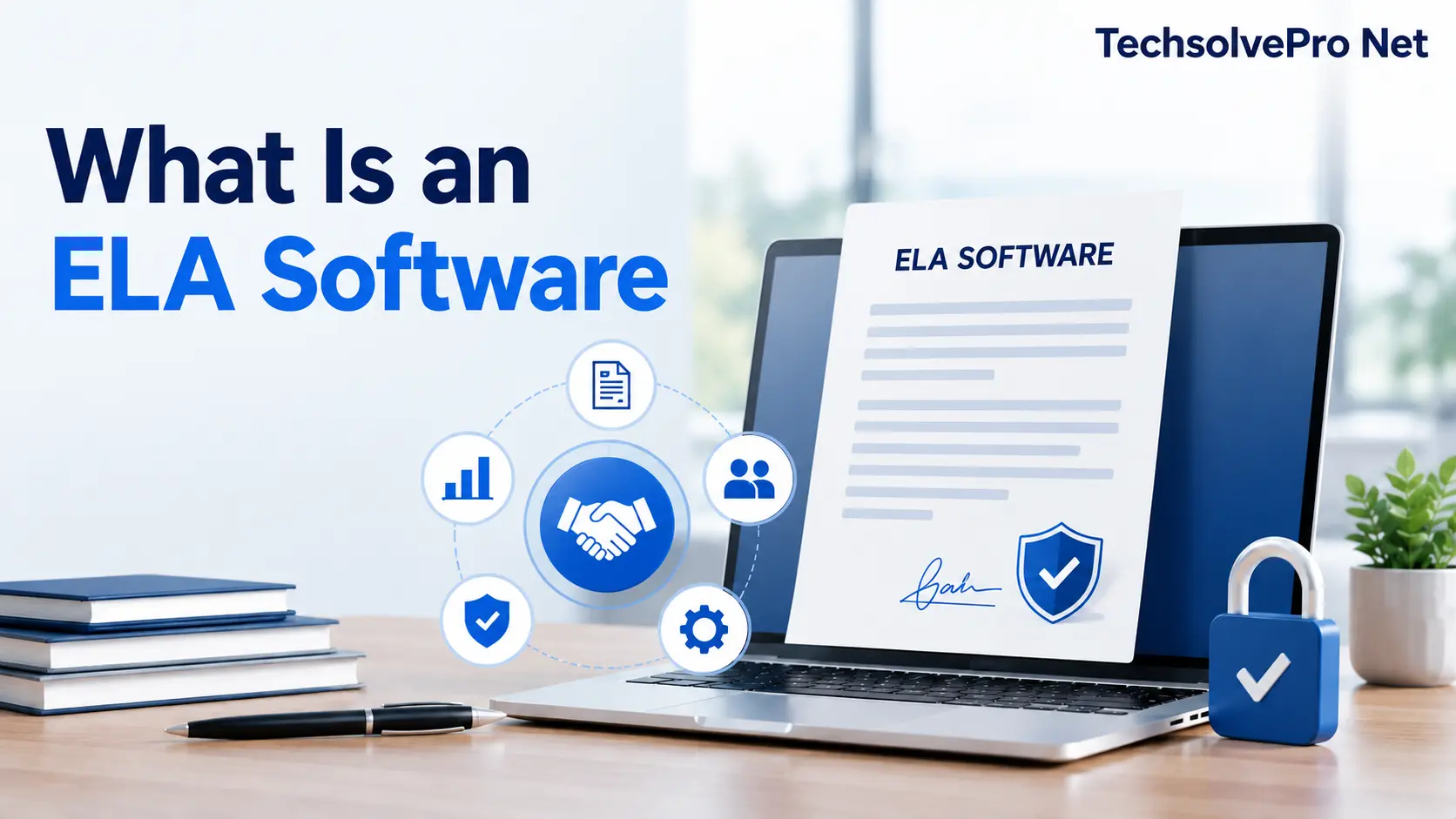
Picture your IT team juggling three hundred separate software licenses across five departments. Each with its own renewal date, price tag and fine print. That headache is exactly what enterprise license agreements were built to solve.
If you’ve been asking what is an ELA software agreement? The answer is this like it’s a single contract that gives your entire organization access to a vendor’s products and services for a set period instead of forcing you to buy and track licenses one by one. It sounds simple but the impact on cost, compliance and daily operations has significant.
What Is an ELA Software Agreement, Exactly?
An enterprise license agreement bundles every license your company needs from one vendor into a single deal. Rather than purchasing seats for Word. It separately for Excel then again for a security tool, one agreement covers the whole stack.
This model works especially well for companies with hundreds or thousands of employees. Instead of a purchasing team chasing renewal dates across dozens of tools it can one contract governs everything under one roof.
The vendor benefits too. They lock in a predictable long term revenue stream instead of relying on scattered and one off purchases that have easy to churn away from.
Why Companies Moving From Per-Seat Licensing
Traditional licensing forces a company to buy access one user at a time. That works fine for a ten person startup but it breaks down fast once headcount climbs into the hundreds.
Per–seat licenses also tend to create waste. Someone leaves the company their license sits unused and finance keeps paying for it because nobody flagged the change.
An enterprise wide agreement removes most of that friction. One negotiated rate covers the organization and the vendor typically and builds in room to add or shift users without a fresh round of paperwork.
Powerful Benefits That Make ELA Agreements Valuable
| Benefit | How It Helps Businesses |
| Cost Control | Helps businesses manage software spending with agreed pricing |
| Easier License Management | Reduces the difficulty of tracking multiple individual licenses |
| Flexible Software Access | Can support software use across different teams and departments |
| Better Budget Planning | Predictable licensing costs can make financial planning easier |
| Centralized Management | Gives organizations greater control over software licensing |
| Negotiation Opportunities | Businesses may negotiate pricing support and usage terms |
Key Components of an Enterprise License Agreement
Every ELA has built around a handful of core elements even though the specific vary by vendor and industry.Enterprise License Agreement
Contract Duration and Renewal Terms
- Most agreement run out three to five year. Which gives both sides room to plan budgets and roadmaps without renegotiating every twelve months. Renewal clauses usually spell out how pricing adjusts for inflation, new products and a change in headcount.
- Beyond duration a solid agreement also spells out
- Scope of use which employees, contractors, and business units can access the software
- Licensing metrics how usage is measured, whether by seat, device, or consumption
- Support terms response times, escalation paths, and maintenance coverage
- Audit rights how often either party can verify actual usage against the contract
- Termination conditions what happens if either side wants to exit early
Benefits of ELA Software for Businesses

The appeal of an ELA goes beyond convenience. Done right, it changes how a finance and IT team operates day to day.
Cost predictability tops the list. Once the contract is signed, the organization knows exactly what it owes for the term, which removes the guesswork that comes with fluctuating per-user fees.
License sprawl also shrinks dramatically. IT no longer has to track separate renewal dates for every tool, which cuts down on the risk of an expired license quietly disrupting operations.
There’s a compliance upside as well. Centralized tracking makes it more easier to prove during an audit that usage matches what was actually purchased.
ELA vs. Traditional Licensing
| Factor | Traditional Per-Seat Licensing | Enterprise License Agreement |
| Pricing | Pay per user or per device | Fixed, negotiated rate for the term |
| Management effort | High — many contracts to track | Low — one agreement covers everything |
| Scalability | Requires new purchases as you grow | Built-in room to add users or products |
| Compliance risk | Higher, due to scattered tracking | Lower, thanks to centralized reporting |
| Contract length | Often annual | Typically 3–5 years |
| Best fit | Small teams, single tools | Large or multi-department organizations |
Common Challenges Organizations Run Into
An ELA hasn’t a set it and forget it deal. Without active management some of the same problems it’s meant to solve can creep back in.
Usage tracking is the biggest one. If nobody owns the job of monitoring consumption then a company can end up paying for far more capacity than it actually needs.
Organizational change has another sticking point. A merger, a layoff round and a sudden hiring spree can shift software needs overnight and the agreement needs enough flexibility to absorb that without a costly renegotiation.
Vendor lock in deserves a mention too. Once a company builds workflows around one vendor’s ecosystem switching providers later becomes expensive and disruptive even if a competitor offers better terms.
ELA Software Agreement vs Traditional Licensing: Which is Better for Your Business?
Many businesses struggle to decide between an ELA software agreement and traditional per-seat licensing. Understanding the key differences can help you make the right decision for your organization in 2026.
Key Differences:
An Enterprise License Agreement gives your entire organization unlimited access to software for a fixed annual fee. Traditional licensing charges per user or device, which quickly becomes expensive as your team grows.
When to Choose an ELA Software Agreement:
Choose an ELA when your organization has more than 50 users needing the same software. It works best for large enterprises that want predictable software costs and simplified license management. Companies that expect significant growth in the next 2 to 3 years benefit most from ELA agreements.
How to Negotiate a Better ELA Software Agreement:
Start negotiations early at least 3 months before your current license expires. Always ask vendors for volume discounts and multi-year pricing options. Include future products in the agreement to avoid additional costs later. Work with a software asset management expert to ensure you are not paying for unused licenses.
Practices for Negotiating and Managing an ELA

A few habits separate companies that get real value from an ELA from those that end up overpaying.
Start with an honest audit of current software usage before any negotiation begins. Knowing exactly what departments actually use like not just what they were issued — gives procurement real leverage at the table.
Negotiate audit rights for your own side, not just the vendor’s. Being able to verify usage independently protects the company if a dispute over compliance ever comes up.
Build in a review cadence. Quarterly or semi annual check ins on consumption keep the agreement aligned with reality instead of drifting for years until renewal forces a reckoning.
Finally, clarify credit and substitution terms upfront. Many agreements allow underused licenses to be swapped for something the company actually needs but only if that flexibility were written into the contract from day one.
Final Thoughts
An enterprise license agreement trades the chaos of scattered licenses for one predictable, centrally managed contract. Once you understand what is an ELA software agreement and how its pieces fit together. It becomes much easier to negotiate terms that actually serve your organization instead of just the vendor’s bottom line. The businesses that get the most value have the ones that keep tracking usage and revisiting terms long after the ink dries.
FAQs
What is ELA software?
ELA (Enterprise License Agreement) software refers to a licensing model where a company signs one contract with a vendor to get access to all its software products for a fixed period — instead of buying separate licenses one by one.
What does ELA stand for in technology?
ELA stands for Enterprise License Agreement. In tech and IT procurement, it’s a bulk, company-wide contract for software access, support, and services.
How does an ELA work?
Company and vendor agree on a fixed price for a set term (usually 3–5 years)
The agreement covers all eligible employees/departments under one license
Usage is tracked and reported periodically (audits, consumption reports)
Company can often add users or swap unused licenses for other products
At term end, both sides renegotiate or renew
What is a Microsoft ELA?
A Microsoft Enterprise License Agreement has Microsoft’s version of this model like it gives large organizations access to Microsoft 365, Windows, Azure and other products under one enterprise wide contract with volume discounts and centralized management through the Microsoft Admin Center.