

You’ve been staring at your screen for hours. Now there has s a dull ache settling behind your nose and between your eyes. It has easy to brush off as tiredness, but nose pain when working on laptop for extended periods is more common than most people realize and it usually has a specific and fixable cause. Whether you’re using a work notebook or trying to optimize a gaming laptop for long sessions, poor screen habits can lead to similar eye and facial discomfort.
The good news has that this kind of discomfort rarely signals anything serious. Once you understand what’s actually happening to your eyes. Sinuses and posture during long screen sessions. The fix has often simpler than you’d expect.
Why Laptop Use Triggers Facial and Nose Discomfort
Long stretches at a screen force your eyes to work harder. Than they were designed to. Your visual system has to maintain sharp focus at a fixed close distance for hours which strains the small muscles around your eyes and forehead.
That strain doesn’t stay contained to your eyes. Pain and pressure can radiate outward to your nose, temples and cheeks. Mimicking the exact feeling of a sinus problem even when your sinuses are perfectly healthy.
The Two Main Culprits Behind Nose Pain When Working on Laptop
Most cases trace back to one of two overlapping issues as sinus related pressure or visual strain from how your eyes have working together. Telling them apart matters because the fixes are different.
| Feature | Sinus Pressure | Eye Strain / Visual Misalignment |
| Nasal congestion | Usually present | Usually absent |
| Pain location | Cheeks, forehead, around nose | Bridge of nose, between eyes, temples |
| Worsens with | Bending over, lying down | Screen time, reading, focusing |
| Improves with | Decongestants, rest | Breaks from screen, eye correction |
| Associated symptoms | Running nose, fatigue, fever | Blurred vision, dizziness, difficult concentrating |
Common Signs Your Nose Pain Is Screen Related
- Pain shows up gradually during long computer sessions and eases once you stop
- You don’t have nasal discharge, congestion or fever
- Symptoms improve noticeably on weekends or days away from screens
- You notice yourself squinting, leaning in or losing focus by afternoon
- Over the counter decongestants don’t make a real difference
How Poor Screen Posture Adds to the Problem
Where you position your laptop matters more than most people think. Looking down at a screen for hours pulls your neck and jaw forward. Which tightens muscles connected to your face and sinus region.
This postural strain compounds any visual fatigue you’ve already dealing with. Which is why nose and facial pain often feels worse by the end of a workday than it does first thing in the morning. The same ergonomic principles apply whether you’re using a traditional laptop or one of today’s mini computers with Windows 11.
When Eye Misalignment Is the Hidden Cause
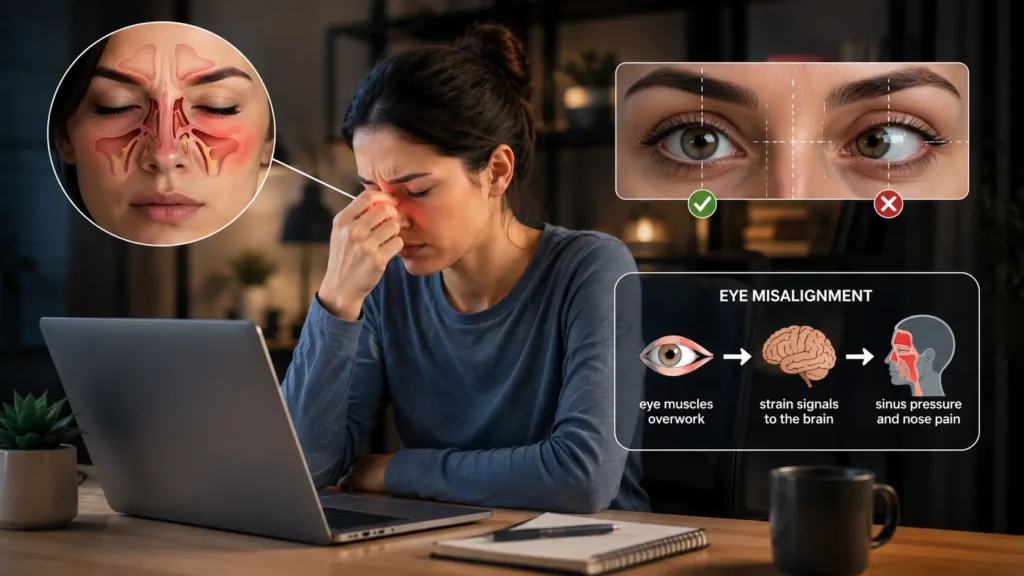
Some people experience facial pain and pressure that looks exactly like a sinus headache but hasn’t one. A subtle misalignment in how the two eyes coordinate can force the eye muscles into constant overwork and that strain often radiates into the nose, brow and cheeks.
This condition has frequently overlooked because a standard eye exam checks vision clarity but doesn’t always test how well the two eyes team together. If facial pain flares specifically during screen use and standard sinus treatments haven’t helped. This is worth raising with an eye care provider.
Simple Fixes You Can Try Today
Before assuming the worst then try adjusting a few basic habits. Most screen related nose and facial discomfort responds well to small consistent changes.
- Follow the 20-20-20 rule in every 20 minute look at something 20 feet away
- Raise your laptop screen to eye level which reduce neck and jaw tension
- Increase text size and screen brightness settings to reduce squinting
- Blink deliberately and often. Since screen focus reduces natural blink rate
- Keep the room well lit. Avoid contrast strain between the screen and surroundings
- Stay hydrated. Since dehydration have thicken sinus mucus and worsen pressure
Adjusting Your Workspace for Long Term Relief
Your desk setup plays a bigger role in facial comfort than most people give it credit for. A screen positioned too high, too low or too close forces constant micro adjustments in your neck, eyes and jaw throughout the day.
Aim for your screen roughly an arm length away positioned. So the top of the display sits at or slightly below eye level. This alone reduces a meaningful amount of strain related nose and forehead pain over an eight hour workday.
traveling with a laptop: Keeping your laptop protected while traveling is equally important if you work remotely from different locations.
Nose Pain When Working on Laptop Versus a True Sinus Infection
It helps to know the difference before reaching for sinus medication. That won’t actually solve the problem. A genuine sinus infection. Typically comes with thick nasal discharge, fever or pain that worsens when you bend forward.
Screen triggered nose pain when working on laptop on the other hand tends to build gradually through the day. Stays isolated to the bridge of the nose and eye area and eases once you step away from the screen for a while. If your symptoms fit the second pattern the fix likely has more to do with your eyes and posture than your sinuses.
When to See a Doctor or Eye Specialist

Most screen related discomfort clears up with better habits but some situations call for a professional opinion. haven’t wait it out if your symptoms fall into any of the categories below.
See a doctor promptly if you experience vision changes pain it keeps worsening despite rest. Fever lasting more than a few days and facial pain paired with dizziness and nausea or balance problems. A sinus specialist can rule out infection with a simple exam. While an eye doctor can check for binocular vision issues then a routine eye test often misses.
Final Thoughts
Persistent nose pain when working on laptop is frustrating. But it has rarely a mystery once you look at the full picture as screen distance, posture and blink rate. How well your eyes are teaming together all play a role. Start with the basics like the 20-20-20 rule and a properly positioned screen and give it a couple of weeks before assuming something more serious has going on. If the pain sticks around despite those changes. A quick visit to a doctor and eye specialist will get you a clear answer instead of more guesswork. Following the latest technology trends has also introduced better laptop displays with reduced blue light and improved eye comfort.
FAQs
Can screen time cause sinusitis?
No, screen time haven’t cause sinusitis. Which is an infection or inflammation of the sinus lining. However, prolonged screen use can cause eye strain and facial muscle tension that mimics sinus pressure. If you hasn’t congestion and discharge or fever. Your symptoms have more likely screen related than a true sinus infection.
How do I get rid of pain in my nose?
Rest your eyes and keep away from screen. Put a warm cloth on your face and drink water. If congestion has present. If the pain has screen related then adjusting your monitor height. Following the 20-20-20 rule bring faster relief.
What vitamins boost sinus health?
Vitamin C support our immune function and reduce infection frequency. Vitamin D and zinc also help regulate immune response and control inflammation. Quercetin a natural antihistamine found in foods like onions and apples. Can ease allergy related sinus swelling. Talk to a doctor before starting any supplement for chronic sinus issue.
How to get rid of a computer headache?
Take a break using the 20-20-20 rule and adjust your screen to eye level. Blinking eyes to prevent dry eyes. Stay hydrated and check your prescription glasse. If headaches persist daily. Then check an eye doctor to rule out binocular vision issues.