
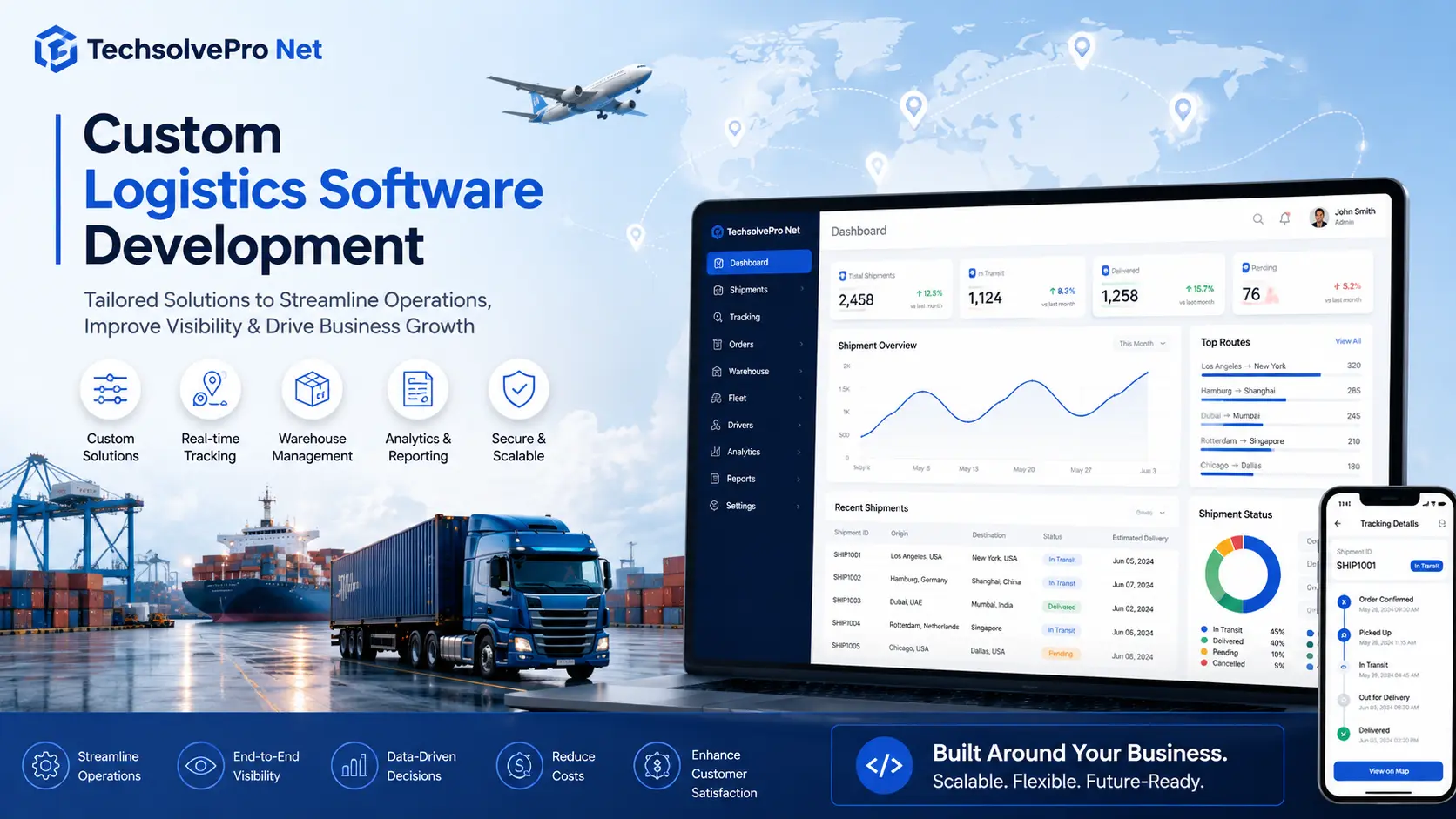
The US logistics industry moves fast and the margin for error keeps shrinking. Fuel prices shift overnight, customer delivery expectations more strict every quarter and carrier capacity fluctuates without warning. Companies still help on spreadsheets, disconnected platforms or generic software feel every one of those pressures twice as hard. That has exactly why forward thinking businesses are prioritizing custom logistics software development to build systems that match how they actually operate.
Off-the-shelf logistics tools promise convenience but they’ve built for the average business. Your operation isn’t average. Whether you’ve coordinating a regional courier network in the Midwest or managing a nationwide distribution chain, you need software that reflects your specific workflows, your team structure and your customer commitments. Generic platforms force you to adapt to them. Custom software adapts to you.
What Custom Logistics Software Actually Means
A lot of companies hear “custom software” and assume it means expensive and slow. In reality, it means purpose-built. Custom logistics software is designed from scratch around your business processes, not assembled from pre-packaged modules that sort of fit.
Instead of working around software limitations, your team works inside a system built for them. Dispatchers see the data they need. Drivers get clear, optimized instructions. Warehouse managers track inventory without toggling between three different screens. Customers receive accurate, real time updates without anyone manually sending emails.
That level of operational alignment doesn’t happen with off the shelf tools. It has engineered deliberately one requirement at a time.
The Problems Generic Logistics Software Creates
Before exploring what custom software solves it’s worth understanding what generic tools cost you in practice.
Most off-the-shelf platforms handle common use cases well enough. But tech logistics operations are rarely common. Your carrier mix, your warehouse layout, your delivery zones, your customer SLAs, these are specific to your business. When software doesn’t accommodate that specificity, your team fills the gap manually.
That manual gap is where errors live. Dispatchers re-enter data between platforms. Drivers call in for route updates that should arrive automatically. Inventory counts drift because warehouse software doesn’t sync with the order management system. These aren’t dramatic failures. They’re slow, daily friction that quietly drains productivity and inflates costs.
Custom software closes those gaps permanently.
Core Features Built Into High-Performing Logistics Platforms
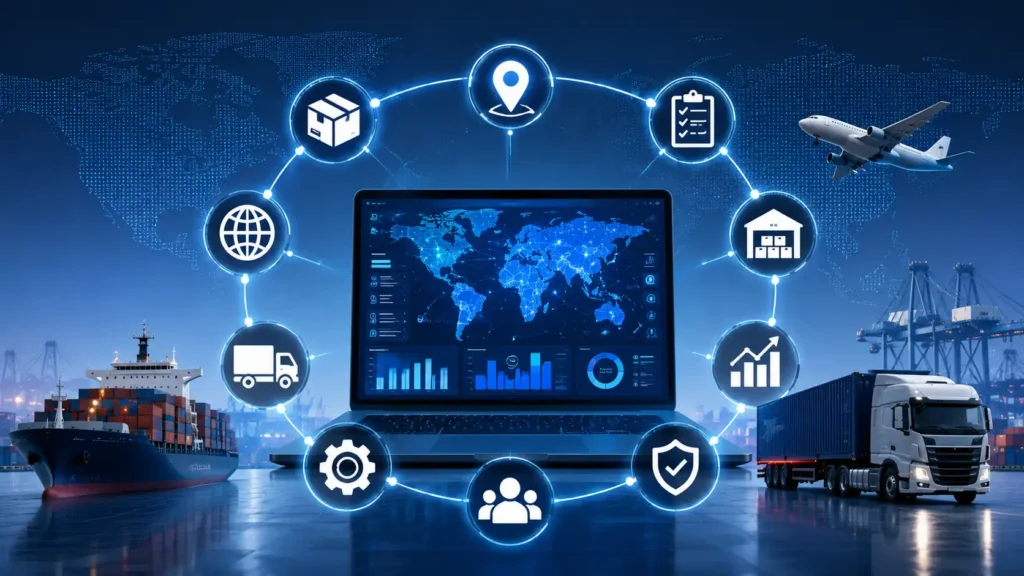
The best custom logistics platforms don’t just digitize existing workflows. They improve them. Here are the features that constantly deliver the highest operational impact.
Intelligent route optimization
Algorithms factor in live traffic weather conditions, vehicle capacity and delivery time windows to generate the most efficient routes automatically
Real time GPS and fleet tracking
Dispatchers and customers see live vehicle positions, reducing check in calls and eliminating delivery disputesWarehouse management integration: Inventory levels, pick and pack workflows and restocking alerts connect directly to dispatch and order management
Driver performance monitoring
Track fuel consumption, speed patterns, idle time and maintenance schedules to reduce costs and improve safety
Centralized order and returns management
One dashboard gives full visibility across multiple fulfillment locations and return processing flows
Predictive demand analytics
AI driven forecasting identifies demand intensity, flags potential bottlenecks and recommends proactive inventory adjustments
Automated documentation
Shipping labels, compliance records and delivery confirmations generate automatically. Removing administrative burden from your team
Custom vs. Off-the-Shelf: A Direct Comparison
| Factor | Custom Software | Off the Shelf |
| Workflow alignment | Exact match to your processes | Requires workarounds |
| Integration capability | Built around your existing tools | Often limited or costly |
| Scalability | Grows with your operation | May require platform migration |
| Upfront investment | Higher | Lower |
| Long-term ROI | Significantly higher | Diminishes as you scale |
| Competitive advantage | Strong differentiation | None — competitors use the same tool |
| Maintenance control | Full control | Dependent on vendor roadmap |
For logistics businesses planning to grow, this comparison almost always tilts toward custom. The upfront cost is real, but so is the compounding return from a system that never forces you into workarounds.
How the Development Process Works
A well run custom logistic software project follows a clear progression. Understanding each phase help you set realistic expectations and provide meaningfully at every stage.
Discover and requirements analysis
Developer spend time inside your operation mapping workflows, identifying pain points and documenting integration requirements. This phase prevents expensive rebuilds later by ensuring the system has designed around reality no assumptions.
UI/UX design
Logistics software serve multiple user types like dispatchers, drivers, warehouse staff, managers and sometimes customers. Each interface has need to match the context in which it has used. A driver app needs to work on a phone with one hand while loading a truck. A management dashboard needs to surface KPIs instantly. Good design accounts for all of this.
Core development
Is where the system gets built? Developers write routing logic, configure tracking layers, build reporting pipelines and connect APIs to third party services like mapping tools, telematics systems and carrier networks. This phase require close collaboration between your team and the developer to catch misalignments early.
Testing and quality assurance
Stress tests the system before anyone relies on it. Load testing confirms performance during peak shipping periods. Functional testing validates every workflow path. Security testing protects sensitive shipment and customer data.
Deployment and integration
Brings the software into your live environment. A skilled development partner stages this carefully running parallel systems when needed and training your team before full cutover.
Ongoing maintenance
Keeps the system present as your business expand. New markets, new carrier integrations and new regulatory are requirements your software should adapt without requiring a full rebuild every few years.
Technologies That Power Modern Logistics Software
The technology choices behind your logistics platform determine its performance, scalability and long term cost of ownership. Modern logistics software typically combines several layers of technology working together.
Cloud infrastructure
Ensures your platform scales without performance drops during Q4 surges or sudden contract wins. AWS, Google Cloud and Azure all offers logistics relevant services like mapping APIs, data warehousing and global content delivery.
Artificial intelligence and machine language
Power the features that move logistics from reactive to observation. Demand forecasting, dynamic route learning and anomaly detection all confidence on AI processing data faster than any human team could.
IoT connectivity
Feeds live data from vehicles, cargo sensors and warehouse equipments directly into your software. Temperature sensitive shipments, fuel level alerts and door open notifications all become part of your operational picture.
Blockchain
Creates tamper proof records for high value or regulated shipments. Carriers, customs authorities and customers can verify chain of custody data without relying on a single party’s records.
APIs and middleware
Connect your new tech platform to the systems you already use ERP tools, CRM platforms, accounting software and third-party carrier networks. A good development partner treats integration as a first class requirement not an afterthought.
The Real Business Case for Custom Logistics Software Development
Strip away the technical details and the business case for custom logistics software development services comes down to one thing control.
When your software fits your operation precisely, you control your costs. Route optimization cuts fuel spend. Automated dispatch reduces administrative overhead. Predictive analytics prevents the expensive scramble of reactive inventory management.
You also control your customer experience. Real time tracking portals accurate delivery windows and proactive exception notifications turn logistics from a source of customer frustration into a competitive advantage. In an environment where Amazon has trained consumers to expect same day updates on every package your visibility tools matter more than ever.
And perhaps most importantly, you control your growth. Custom software development for logistics scales with your business. New service areas, new carrier relationships, new fulfillment models these become configuration decisions, not software crises.
What to Look for in a Development Partner

Choosing the right team to build your logistics platform has as important the decision to build it. The wrong partner produces software that looks functional but breaks under real operational pressure.
Look for development teams with direct experience in transportation and supply chain projects. General software experience is valuable but insufficient. Logistics has specific technical requirements around mapping, carrier APIs, compliance tracking, and real-time data handling that require domain familiarity.
Evaluate their discovery process. Partners who write code before fully understanding your workflows are cutting corners that will cost you later. The best teams spend meaningful time mapping your operation before proposing a solution.
Ask specifically about post launch support. Software needs maintenance especially during the first six months after deployment. When real world use reveals edge cases testing didn’t catch. Confirm your partner provides structured support not just emergency fixes.
Final Thoughts
The logistics industry rewards businesses that invest in operational precision. Every inefficiency in your current system like manual data entry, misrouted deliveries, inventory blind spots represents a cost that compounds quietly over time.
Committing to custom logistics software development is how serious logistics operators take control of those costs and convert them into advantages. When your tech platform fits your operation, your team performs better, your customers trust you more, and your margins reflect that alignment.
The question isn’t whether your business needs better logistics software. The question is how long you can afford to wait.
FAQs
How long does custom logistics software take to build?
Most projects range from four to twelve months depending on complexity. A focused fleet tracking solution can launch in four to six months. A full transportation management system with AI forecasting and multi carrier integration typically takes nine to twelve months from discovery to deployment.
What does custom logistics software development cost in the US?
Project costs typically range from $50,000 for targeted solutions to $250,000. More for enterprise grade platforms with advanced AI, IoT and multi location support. Annual maintenance generally adds 15 to 20 percent of the initial build cost.
Can custom logistics software connect to tools I already use?
Yes. Experienced development teams build integration layers that connect your new platform to existing ERP systems, accounting tools, CRM software and third party carrier networks. This protects your existing investments while expanding what your operation can do.
When does custom software make more sense than a SaaS logistics platform?
Custom software becomes the stronger choice when your workflows are complex when off the shelf tools require significant workarounds or when you need a customer facing experience that differentiates your brand. Growing businesses often find that SaaS platforms become limiting before their growth does.